





The room suddenly feels very small. The air grows thick, making it hard to take a full breath. Your vet is speaking, but their voice sounds like it’s coming from the end of a long, dark tunnel. You catch fragments of words: mass, malignant, oncology, prognosis.
Then, the world goes quiet.
In that moment, a single piece of paper, the pathology report, weighs a thousand pounds. You walk out to your car, look at your dog wagging their tail in the backseat, and the weight of the unknown hits you. What do I do now? How do I choose the right path? How much time do we have?
If you’re feeling this right now, please take a deep breath. We have been exactly where you are. We know the hollow ache in your chest and the frantic urge to spend hours on Google at 3:00 AM.
Lately, you might have heard people talking about "Dog Cancer Coaching." It’s a growing movement in the pet world, and it’s changing the way families navigate this journey. It isn't just a trend; it’s a lifeline.
Here is why everyone is talking about it: and more importantly, how it can help you and your pup find peace in the middle of the storm.
Bridging the Gap Between the Clinic and the Living Room
Veterinary oncologists are brilliant. They are the tactical experts who understand the cellular makeup of the disease. But their time is often limited. They have twenty minutes to explain a complex diagnosis, list three treatment options, and hand you a folder of pamphlets before moving to the next exam room.
But what happens when you get home?
What happens when you have to decide between chemotherapy and palliative care? What happens when your dog stops eating their favorite kibble? This is where a dog cancer coach steps in.
We like to think of a coach as your "Chief Strategy Officer" and your "Emotional Anchor" rolled into one. A coach doesn't diagnose or prescribe: that’s for the vets. Instead, a coach walks beside you to translate medical jargon into human language.
They bridge the gap between the clinical data and your actual life.

Translating the Science into Heart-Centered Action
When you hear about things like B-cell and T-cell lymphoma, it can feel like you’re learning a foreign language while your heart is breaking.
A coach helps you understand the "why" behind the "what." We often use analogies to make sense of the chaos. For example, think of your dog’s immune system as a specialized defense force. B-cells are like the intelligence officers: they identify the intruders and mark them. T-cells are the soldiers: the boots on the ground that go in to do the heavy lifting.
When cancer happens, the communication line breaks. Coaching helps you understand how different treatments: whether it’s traditional medicine, holistic support like CBD, or specific nutritional changes: work to support those "soldiers" and "officers."
By understanding the science through a lens of love, the fear begins to lose its grip. You move from a state of panic to a state of purpose.
The Four Pillars of Coaching Support
Why is this specifically helping so many pups? Because it addresses the whole dog and the whole human. Here are the four main ways a coach changes the experience:
1. Medical Interpretation and Advocacy
A coach helps you prepare for your vet visits. You’ll go in with a list of targeted questions, feeling empowered rather than overwhelmed. When the results come back, your coach helps you sift through the data so you can make decisions based on clarity, not just "the next thing on the list."
2. Tailored Quality-of-Life Planning
Every dog is an individual. A coach helps you create a roadmap that prioritizes dignity. Whether you are making decisions for osteosarcoma or managing a slow-growing mast cell tumor, the focus remains on "The Golden Rule": Does this treatment add life to their days, or just days to their life?
3. Nutritional and Comfort Guidance
Food is one of the few things we can control. Learning about feeding a dog with cancer is a powerful way to feel like you are fighting back. A coach provides evidence-based suggestions for supplements and comfort care that align with your specific goals.
4. Emotional Grounding
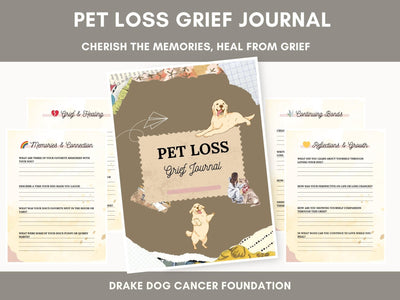
This might be the most important part. Caregiver burnout is real. The "anticipatory grief" can be paralyzing. A coach provides a safe space to say, "I'm scared" or "I don't know if I can do this." They offer tools, like our free grief journal, to help you process the heavy emotions so you can show up fully for your dog.

Why the "Community" Aspect Matters
Cancer is an isolating disease. You might feel like your friends and family "don't get it": they might ask why you’re spending so much time or money on "just a dog."
Dog cancer coaching often connects you to a wider community of people who truly understand. When you realize you aren't alone, the burden becomes lighter. There is a collective strength in a group of people who all believe that our dogs deserve every ounce of our devotion.
We aren't just fighting a disease; we are honoring a bond.
Finding the Outliers
Vets often speak in statistics. They talk about "median survival times." But here is a secret we’ve learned through years of coaching: Statistics are not destiny.
Every dog has the potential to be an outlier: that one pup who defies the odds and thrives far longer than anyone expected. Coaching focuses on creating the best possible environment for that to happen. We look for the "good days" in the small moments. The way the sun hits their fur. The way they still huff when they hear the treat jar.
We focus on the living, not just the dying.

Is Coaching Right for You?
You might be wondering if you really "need" a coach. The truth is, you are already doing an amazing job. You love your dog fiercely, and that is the most important ingredient.
But if you feel like you are drowning in information, if you are struggling to make a choice between two difficult options, or if you just need someone to hold your hand through the process of coping with loss, a coach can be the lighthouse that guides you home.
At the Drake Dog Cancer Foundation & Academy, we don't just offer coaching; we train the next generation of compassionate guides. We believe that no one should have to walk this path alone.
A Final Thought for the Weary Heart
If you are reading this while your dog sleeps at your feet, take a second to really look at them. Beyond the diagnosis. Beyond the "cancer." See the soul that has loved you unconditionally.
You are their world. And right now, you are doing everything right just by seeking out information and support.
The journey ahead may be difficult, but it can also be a time of profound connection and deep, meaningful love. You don't have to have all the answers today. You just have to take the next step.
You’ve got this. And we’ve got you.
If you’re looking for a place to start, join our Dog Cancer Community or explore our educational resources to find the support you and your pup deserve.


