





It’s a quiet Tuesday evening, and you’re watching your old friend sleep. You notice a grey muzzle that wasn't there a few years ago, a slight stiffness when they get up from the rug, and maybe they’re a bit slower to hear the treat jar open. We often tell ourselves, "They’re just getting older." We want to believe it. We want to embrace the "senior years" as a natural, slow transition.
But sometimes, our gut tells us something else is happening. Maybe your dog had a sudden, frightening "spell." Or perhaps their personality seems to have shifted overnight. At the Drake Dog Cancer Foundation, we’ve walked this path ourselves. We know that pit-in-your-stomach feeling when you realize your companion’s "senior moments" might be something more serious.
When it comes to brain cancer in dogs, early detection isn't just about medicine; it's about honoring the bond you share. It’s about giving them the best possible quality of life. Today, we’re going to walk through the five warning signs of a brain tumor that are often dismissed as "just old age." We’re here for you, and we’re going to navigate this together.
1. The Red Flag: New-Onset Seizures
If your senior dog (usually age five or older) has their first seizure, it is the single most important red flag we want you to notice.
In younger dogs, seizures are often caused by idiopathic epilepsy. But in a senior dog, the brain doesn’t typically "just start" having seizures without a structural cause. Research tells us that for many dogs, a seizure is the very first clinical sign of a brain tumor, especially types like meningiomas or gliomas.
Seizures aren't always the dramatic, "grand mal" events we see in movies where a dog collapses and paddles their legs. They can be subtle:
- Focal Seizures: Twitching of just the face or one limb.
- "Fly-Biting": Snapping at the air as if they are seeing bugs that aren't there.
- Staring Spells: Moments where they seem "gone," unresponsive to their name for several seconds.
If you see any of these, please don't wait. Record a video if you can, this is incredibly helpful for your vet, and reach out for professional guidance. We’re here for you, and getting a clear answer is the first step toward real help.

2. "Lost in the House": Behavioral and Cognitive Shifts
We often hear pet parents say, "I thought it was just doggy dementia." Canine Cognitive Dysfunction (CCD) is real, but the symptoms overlap heavily with brain tumors.
The difference is often in the progression. A brain tumor creates pressure within the skull, leading to behavioral shifts that can feel strange or "off." Watch for these specific behaviors:
- Getting Stuck: Does your dog walk into a corner and seem unable to figure out how to back out?
- Pacing or Circling: Are they walking in circles, often always in the same direction?
- Altered Sleep Cycles: Are they suddenly restless and pacing all night but sleeping deeply all day?
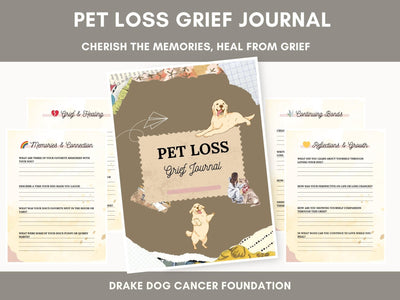
While these can be signs of aging, when they appear suddenly or alongside other physical changes, they demand a closer look. Our dog cancer journals are designed to help you track these subtle shifts day-by-side, making it easier to show your vet exactly how your dog's behavior is changing over time.
3. The "Personality 180"
One of the most heartbreaking signs for a pet parent is when their "sweet soul" suddenly becomes irritable or withdrawn.
A tumor can press on the parts of the brain that regulate mood and impulse control. You might notice your dog:
- Growling or snapping when touched in a way they used to love.
- Withdrawing from the family, hiding in a closet or under a bed.
- Losing interest in their favorite toys or the "joy of the walk."
This isn't your dog being "grumpy" because they are old. It is often a physical response to discomfort or neurological confusion. We believe in treating every dog with the compassion they deserve, and recognizing that these behavioral changes are "the tumor talking" can help us provide the gentle care they need during this time.

4. Vision Loss and the "Spaced Out" Look
Is your dog suddenly bumping into doorframes? Or perhaps you’ve noticed their eyes doing something strange, like darting back and forth (nystagmus) or having pupils of different sizes.
Because the brain controls every sense, a tumor can interfere with how your dog perceives the world. You might see:
- The "Spaced Out" Look: A vacant expression where they don't seem to recognize you for a moment.
- Head Pressing: This is a very specific sign where a dog literally presses their forehead against a wall or firm surface for long periods. It is often a sign of intense intracranial pressure and is a medical emergency.
If you see head pressing, please contact an emergency vet immediately. This is one of those moments where "real help" means fast action.
5. Changes in House-Training
It’s easy to forgive an "accident" in an older dog, attributing it to a weakening bladder. However, a brain tumor can disrupt the signal between the brain and the body that tells a dog they need to go.
If a previously perfectly house-trained dog suddenly starts having accidents, and seems completely unaware that it’s happening, it could be neurological. They aren't "forgetting" their training; the "equipment" is working, but the "control center" is struggling to send the right messages.
Moving Toward Clarity: The Next Steps
Hearing the words "brain tumor" is a heavy burden. We know the fear that comes with it. But we also know that information is power.
If you are seeing these signs, the first step is usually a thorough neurological exam. Your vet may recommend an MRI to see exactly what is happening inside the brain. While this can be a daunting process, remember that we never give false hope, only real help rooted in science and compassion.
How We Can Support You Right Now
At the Drake Dog Cancer Foundation, we’ve created tools to help you manage the uncertainty. You don't have to search the entire internet; we've gathered the trusted resources for you:
- The Joys of Life Scale: This is our free tool designed to help you objectively measure your dog’s quality of life. It helps take the "guesswork" out of how they are feeling today.
- Symptom Tracking: Use our digital templates and journals to log seizures, behavior changes, and "good days vs. bad days."
- Holistic Awareness: Under the guidance of Dr. Amber L. Drake, we combine scientific evidence with natural medicine to help support your dog's brain health and inflammation levels.

We’re Here For You
If your dog is showing these signs, please know that you aren't alone. Whether it is "just old age" or a more serious diagnosis, our mission is to ensure that no pet parent walks this path in the dark.
Every wag, every nap in the sun, and every gentle nuzzle is a victory. Focus on the bond. Focus on the love. We’ll handle the resources and the research.
We’re here for you.
The information provided by the Drake Dog Cancer Foundation is for educational purposes and is not a substitute for professional veterinary advice, diagnosis, or treatment. Always seek the advice of your veterinarian with any questions you may have regarding a medical condition.


